

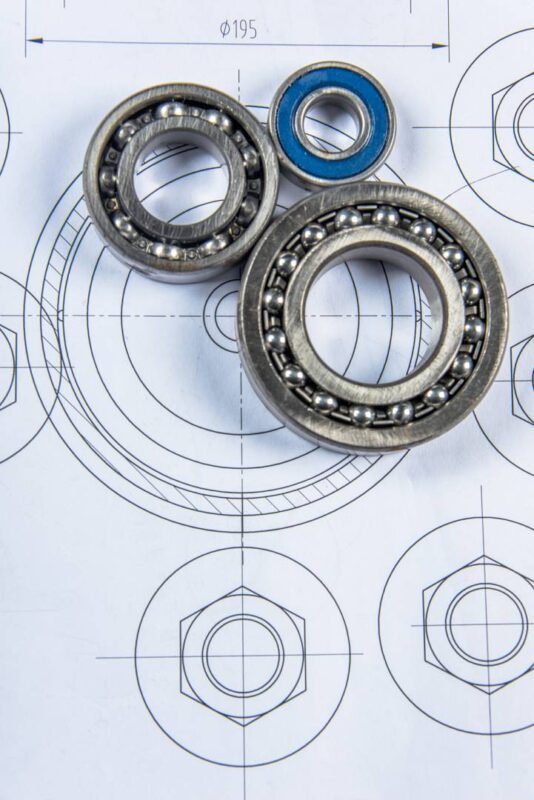
Ball bearings play an indispensable role in modern machinery, ensuring proper operation and durability of industrial equipment. Their essential function of reducing friction between moving parts not only promotes machine efficiency and performance but is also crucial for continuous innovation in the industry. Bearings enable smoother, more precise, and faster operations, resulting in significant improvements in production and product quality.
In addition, in-depth knowledge of how bearings work and how to maintain them properly becomes a vital responsibility for engineers and technicians. Understanding bearing operation and best maintenance practices can prevent mechanical failures and extend machine life, ensuring peak performance. Thus, bearings are not just components but true pillars of industrial excellence.
Ball bearings play an indispensable role in modern machinery, ensuring proper operation and durability of industrial equipment. Their essential function of reducing friction between moving parts not only promotes machine efficiency and performance but is also crucial for continuous innovation in the industry. Bearings enable smoother, more precise, and faster operations, resulting in significant improvements in production and product quality.
In addition, in-depth knowledge of how bearings work and how to maintain them properly becomes a vital responsibility for engineers and technicians. Understanding bearing operation and best maintenance practices can prevent mechanical failures and extend machine life, ensuring peak performance. Thus, bearings are not just components but true pillars of industrial excellence.
History and Evolution of Bearings
Bearings, crucial components in mechanical engineering, have a history that spans thousands of years. Since their origins, they have evolved significantly, playing a vital role in increasing the efficiency and productivity of modern machines.
The first references to bearings date back to ancient times, when early civilizations faced the challenge of moving heavy objects. Wooden logs were used as rollers under bulky loads—a basic rotation principle that laid the foundation for bearing development.
Over the centuries, bearing design advanced. In the Middle Ages, the concept of wheels with rotating axles gained popularity. However, it was during the Industrial Revolution (18th–19th centuries) that bearings became essential components. Engineers created more sophisticated models, using metals and experimenting with new formats to maximize factory performance.
Technological Innovations and Design Advances
The 20th century marked an era of unprecedented innovations in bearings. With the introduction of new materials such as chrome steel and specialized alloys, bearings began supporting heavier loads and operating at higher speeds. Advances in ball and cylindrical bearing technology reduced friction and increased precision, while modern lubricants further extended component life.
The digital age and automation also shaped bearing evolution. Modern bearings now integrate sensors capable of monitoring performance and detecting failures before they become critical. These innovations improved operational efficiency and paved the way for increasingly complex and precise machines.
Historical Importance of Bearings in Industry
Throughout history, bearings have not only supported increasing industrial demands but also propelled mechanization across various sectors. From small mechanisms to massive industrial equipment, bearings remain fundamental to the progress of modern technology.
Recognizing their historical importance highlights their ongoing role in transforming the modern world—illustrating a journey of technological innovation that continues to shape global mechanization.
Types of Bearings and Their Applications
Ball Bearings
- High rotation, low load capacity.
- Reduce friction and provide smooth operation.
- Common in electric motors and turbines, essential in automotive and aerospace industries.
Roller Bearings
- Robust design for heavy loads.
- Distribute pressure efficiently, withstand impact and axial forces.
- Found in industrial machinery, presses, and conveyors.
Needle Bearings
- Compact design for limited-space applications.
- Large contact area despite small dimensions.
- Ideal for gears and automotive transmissions.
Understanding the functionality of each type is crucial for integrating bearings into diverse and complex systems. Proper maintenance ensures their functionality and longevity, preserving machine efficiency and innovation.
Benefits of Bearings in Modern Machinery
- Extended Machine Life: Reduce friction and overheating, protecting internal components.
- Energy Efficiency: Less resistance lowers energy demand, reducing costs and environmental impact.
- Quieter Operations: Absorb vibrations and noise, ensuring smoother and safer performance.
Effective bearings are key not only to productivity but also to advancing sustainable and responsible industrial practices.
Recent Innovations in Bearing Technology
Advanced Materials for Durability
- Use of alloys, composites, and advanced ceramics for high-temperature and high-load environments.
- Self-lubricating materials reduce maintenance needs.
Sealed Bearings Against Contamination
- Prevent entry of dust, liquids, and debris.
- Retain lubricants for smoother, long-lasting performance.
Customized Designs
- Tailored dimensions, enhanced load capacity, corrosion resistance, and high-speed capabilities.
- Developed in collaboration with engineering teams for maximum reliability.
Such innovations reflect the industry’s ongoing commitment to pushing boundaries and meeting increasingly demanding requirements.
Bearing Maintenance and Care
- Lubrication: Essential for reducing friction, wear, and overheating.
- Regular Inspections: Detect unusual noises, vibration, or excessive heat early.
- Best Practices: Correct installation, proper alignment, clean environments, and trained maintenance staff.
- Modern Techniques: Vibration analysis and thermography provide deeper insights into bearing health.
A proactive approach to bearing care ensures longer life, prevents costly downtime, and maximizes productivity.
Conclusion
Bearings are critical in a wide range of modern machines, performing the essential role of reducing friction and supporting loads. From heavy industrial equipment to precision electronics, they are indispensable for efficiency, reliability, and technological progress.
Proper selection, installation, and maintenance ensure not only longer service life but also improved performance and sustainability. Bearings remain pillars of industrial excellence, driving innovation and ensuring that modern machines operate at their highest potential.